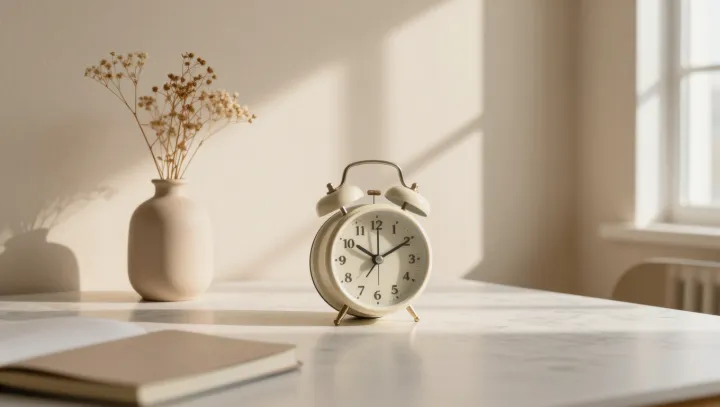
Sunlight, not the ticking gadget, still holds the deeper authority on time. A desk clock offers neat digits, yet the sliding light on a wall quietly invokes circadian rhythm and solar geometry, signals that predate any gear or quartz oscillator. The body reads that brightness shift as an absolute marker, while the clock remains a negotiable convenience.
This bias is not romantic; it is anatomical. Inside the skull, the suprachiasmatic nucleus locks to light through retinal photoreceptors that ignore color and detail but react fiercely to illumination, building an internal phase estimate every single day. A plastic movement on the table cannot reach that pathway. It runs on electromechanics and human calibration, which means error, drift, dead batteries.
Culture reinforces the hierarchy. For most of history, noon meant the shortest shadow, not a number. Even now, a delayed meeting feels excusable, yet a sky already dim at the office window feels like an indictment that the day has slipped away. The clock speaks in digits; the wall of light speaks in consequences, and the brain trusts the messenger that can change sleep, hunger, mood.