Weightlessness in orbit is not a magic escape from gravity; it is gravity running the entire show. Inside the International Space Station, the pull from Earth is only slightly weaker than at sea level, strong enough that a dropped wrench would accelerate almost as fast as it would on the ground if it were not moving sideways at extreme speed.
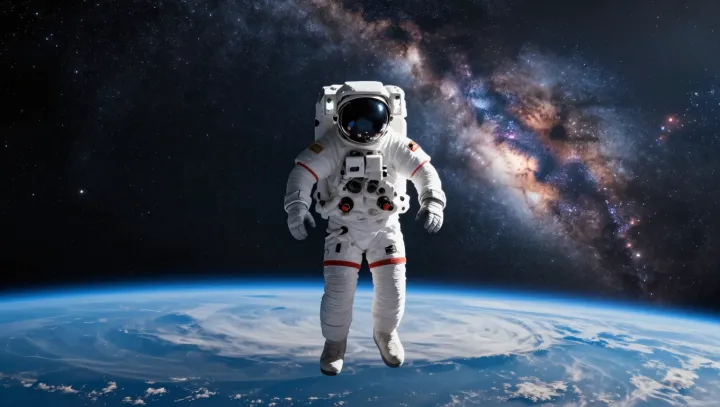
The key claim is blunt. Astronauts float because they and their spacecraft are in perpetual free fall. Orbital mechanics says that if you launch an object fast enough horizontally, the curved surface of Earth falls away at the same rate the object falls toward it, so the trajectory becomes a closed path rather than a crash. This balance between gravitational acceleration and tangential velocity keeps the station circling while everything inside shares the same continuous plunge.
The real shock is that “no weight” here means no support force, not no gravity. On the ground, a bathroom scale pushes up on your feet, and that normal force is what you interpret as weight. In orbit, both astronaut and scale accelerate together under the same gravitational field, so the scale never needs to push back. No push. No reading. No sensation of weight, even as gravity quietly curves the entire flight path.