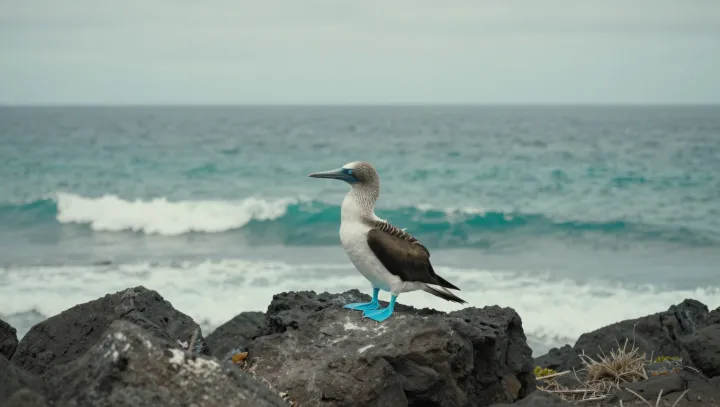
Those absurdly bright feet are not a design flaw. They are a high-stakes bet on two very different theaters: bare rock and open water. On land, sexual selection does the heavy lifting. Carotenoid-based pigments and structural scattering load the feet with intense turquoise, a signal whose saturation tracks immune status and foraging success. Females run ruthless visual audits; males with duller spectra get fewer mates, and their genes slide quietly offstage.
Out at sea, the same color behaves almost like a disappearing trick. Blue wavelengths penetrate water efficiently, and against a fractured background of sky reflection, wave glare and subsurface haze, those feet slip into optical noise. Predatory dives rely on streamlining and timing, not on leg camouflage, so natural selection faces little penalty for flamboyance below the surface. Instead, hydrodynamic form and binocular vision carry the cost of each plunge, while the feet trail as cheap ornaments, invisible enough to prey yet loud enough to partners when the bird climbs back to rock.