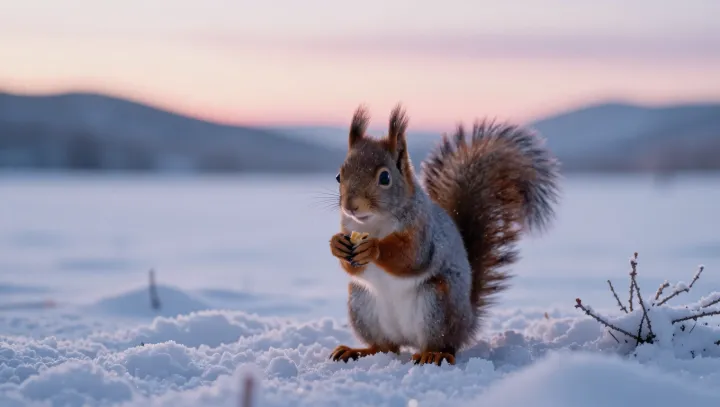
That still squirrel on the snow is not calm. It is running a biochemical furnace at full throttle, using a system more efficient than any coat of fur. The key is brown adipose tissue, a specialized fat that burns energy purely to make heat, not to store it, and it turns the animal into a compact heat generator even when muscles barely move.
This quiet pose is a calculated gamble. Instead of wasting energy on constant motion, the animal leans on non‑shivering thermogenesis, driven by mitochondria dense in that brown fat and by the protein uncoupling protein 1, or UCP1, which lets protons leak across the inner mitochondrial membrane and release energy as heat. Clusters of this tissue sit near the heart, major blood vessels, and between the shoulders, so the warmed blood flows straight to vital organs while the tail and outer limbs can afford to cool.
Even the apparent stillness is strategy. By keeping movement minimal, the squirrel reduces convective heat loss and avoids attracting predators, while precise vasoconstriction shunts blood away from skin and extremities toward the core, preserving brain and cardiac temperature. Metabolic rate rises, oxygen consumption spikes, and the brown fat heater compensates for the brutal thermal gradient between a small body and open snow, allowing that brief winter pause to be survivable rather than fatal.