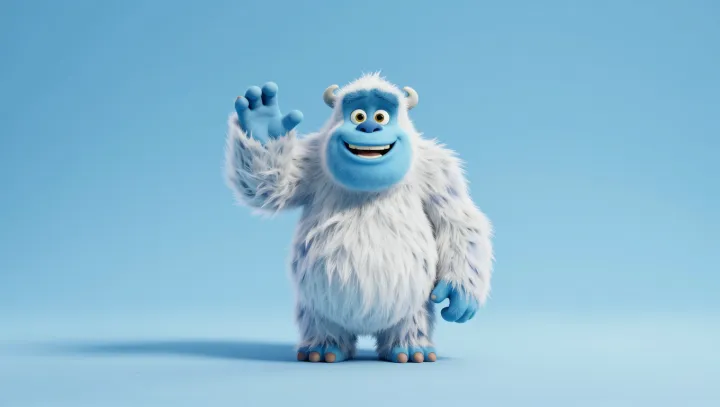
Softness, here, is a lie told by physics. Thick fur, subcutaneous fat and a compact torso, all classic responses to cold and hypoxia, can stack into the rounded outline that human perception reads as harmless and toy‑like. A short muzzle, reduced extremities and slightly forward‑tilted posture then exaggerate that impression, not for charm but to cut heat loss and keep airways efficient in thin air.
The odd part is not the anatomy; it is the way our brains misfile it. Neural circuits tuned for baby‑schema detection, described in ethology as a response to large craniums, big eyes and soft contours, light up when those survival structures align by chance. Add countershading that smooths visual edges, plus dense guard hairs that blur texture, and a predator‑proof insulation system starts to resemble velour in the human visual cortex.
What looks like whimsy is just convergent geometry. Bergmann’s rule and Allen’s rule, dry staples of thermoregulation theory, favor bulk, stubby limbs and a tucked‑in gait at altitude; human pareidolia turns the same package into personality. Evolution optimizes surface‑area‑to‑volume ratios and oxygen use, while our social brains project intent, friendliness and even manufactured plushness onto a body that is only trying not to freeze.