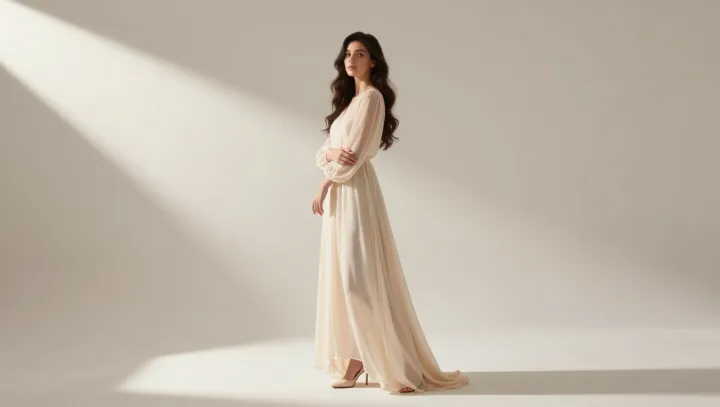
An almost empty frame is not a cost-cutting measure; it is a power move. In commercial imaging, cognitive load theory and figure–ground perception show that stripping away visual noise frees the brain to assign more attention, and therefore more value, to the lone object that remains. One ivory dress, suspended in a quiet studio, sits at the top of the visual hierarchy by default, while a crowded, color-saturated set forces the eye to compete with itself.
Timeless elegance is less about fabric and more about memory. Brand researchers have repeatedly found that sparse compositions increase recall and strengthen brand identity because the viewer can encode a single, stable symbol instead of juggling multiple cues. Against a near-blank backdrop, an ivory tone reads as neither seasonal nor trend-specific; it behaves like a constant, a kind of visual baseline that survives shifting palettes and styling tricks, which is exactly what luxury houses try to buy with far larger budgets.
The real paradox is economic. High-budget sets often erode the very scarcity they hope to project, turning a garment into just another prop in an elaborate narrative. The lone dress in the near-empty studio does the opposite: by isolating itself, it mimics the logic of scarcity marketing and gallery display, hinting that the piece deserves the kind of undivided space usually reserved for art, not for a passing season.