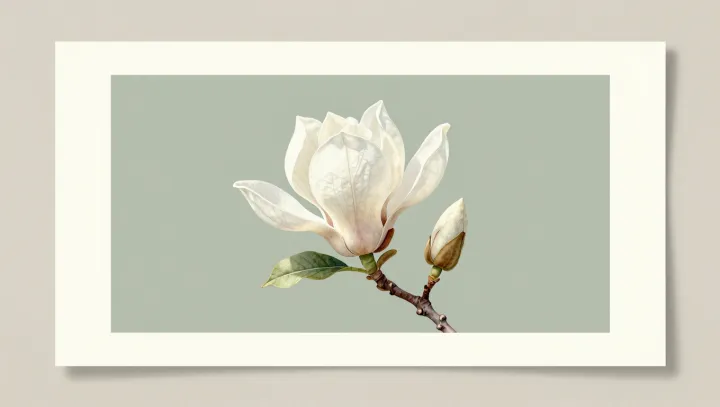
A plain white rose should have stayed anonymous. Instead, one carefully painted specimen turned into a quiet standard for how scientists read petals. By stripping color and marking only the spiral lines and junctions, illustrators gave botanists a clean geometry that messy living flowers rarely offer.
The odd truth is that this single rose matters less as a plant than as a diagram made flesh. Its stylized whorls exposed phyllotaxis patterns and the Fibonacci-like spacing that developmental biology had long suspected but struggled to isolate in real time. With pigment used only to trace organ primordia, researchers could align what they saw under dissecting microscopes with formal models of auxin transport and meristem dynamics, instead of guessing through overlapping shades and irregular petals.
Equally striking is how this rose survived the shift from hand drawing to computation. Digitized sketches of that white corolla now guide algorithms that segment petals in three-dimensional scans and validate simulations of organogenesis. When growth models in differential geometry output a virtual bloom, they are still checked against that simplified rose map. In a field crowded with exotic species and complex datasets, a single pale flower, edited almost to abstraction, continues to anchor what counts as a believable petal.