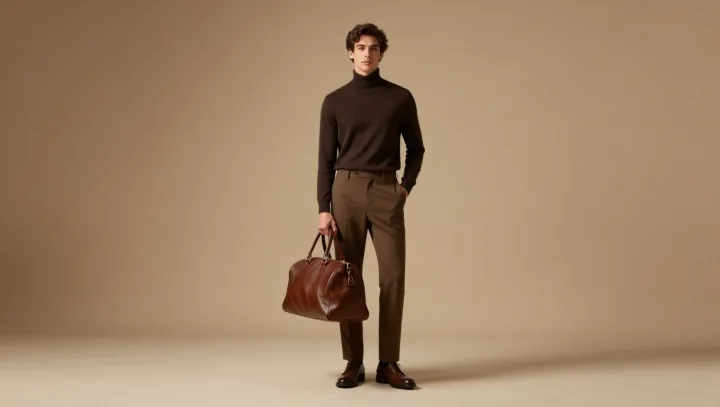
Snow does a strange favor to anyone dressed in nearly one pale tone from head to boot. Against that white field, the body stops reading as separate blocks and starts reading as a single vertical bar.
Monochrome wins. By keeping jacket, pants and boots within a narrow band of brightness, the eye loses the horizontal cut lines that normally chop a figure into thirds, so visual processing defaults to one continuous contour from crown to heel, an effect well documented in size-constancy research and Gestalt grouping. Add a beanie in almost the same shade and the perceived height line literally moves upward, because the mind treats fabric and hair as one uninterrupted column.
Warmth, oddly, benefits from the same near-invisibility. When pale layers are built from high-loft synthetic insulation and low-emissivity shell fabrics, they reduce convective heat loss while bouncing a fraction of the body’s infrared radiation back inward. Blend that with the reflective quality of snow, and a light-colored outfit can feel less harsh than a dark one that absorbs shortwave solar energy but then dumps it rapidly to cold air through higher radiative transfer. The person may vanish into the scene, yet their thermal envelope and vertical presence quietly intensify.