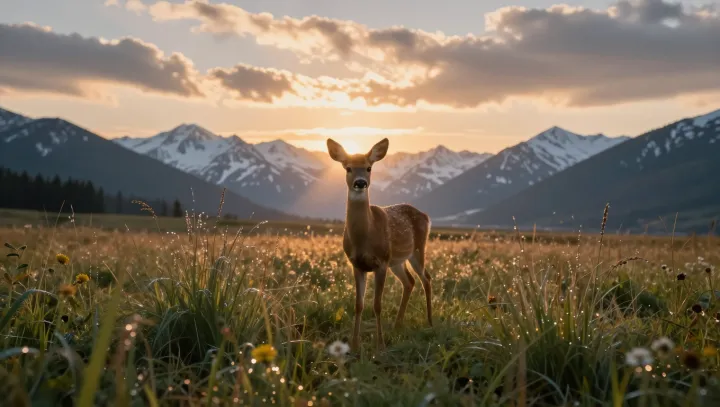
Sun on its back, head down in the grass, that deer is quietly making winners and losers. With every bite, selective herbivory pushes certain species into retreat while giving others space, light, and root access. Grasses that rebound fast under chronic defoliation gain an edge, while slow-growing shrubs and tender forbs get trimmed back before they can shade rivals or monopolize groundwater.
More radical than it looks is what happens below the hooves. By routing plant biomass through its gut, the animal speeds up mineralization and nutrient cycling, turning locked carbon and nitrogen into quickly available ammonium and nitrate. Its dung and urine fall in tight patches, building nutrient hotspots that skew soil microbiomes and mycorrhizal networks, so fertility stops being uniform and starts following the deer’s daily routine.
From that uneven map of food and cover, the rest of the community takes its cues. Where the grazer keeps vegetation short, ground-nesting birds lose concealment while low rosettes and mosses gain light. Taller, unbrowsed clumps become refuges for small mammals and insects, but predators track those clusters as hunting sites. One apparently trivial breakfast, repeated, sets the carrying capacity for everything from beetles to owls and decides who can stay on the slope at all.