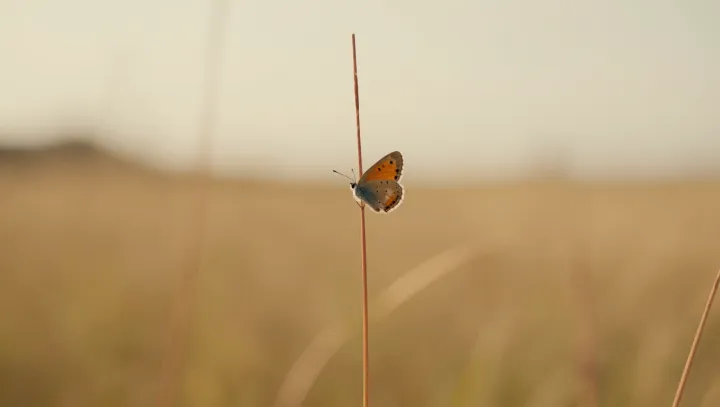
Deception, not beauty, drives this butterfly’s design. A closed pair of wings shows only dull brown, a near-perfect match to dry grass through background matching and low-contrast patterning that dampens visual detection by birds scanning from above.
Yet the same insect carries a second identity. When threatened, it snaps its wings open, revealing high-contrast black-and-orange eye spots that trigger predator startle responses and exploit motion-sensitive neurons in the avian optic tectum, buying fractions of a second that decide survival. Those circles are not just decoration; experimental work with painted-over wings shows attack rates climb when the spots vanish and ambushes land closer to the head instead of the expendable wing margin.
What looks like a simple color trick is really a two-stage visual strategy. Cryptic coloration minimizes encounter probability, while deimatic display manipulates threat assessment once discovery occurs, a layered defense that turns cheap pigment into a powerful behavioral shield.