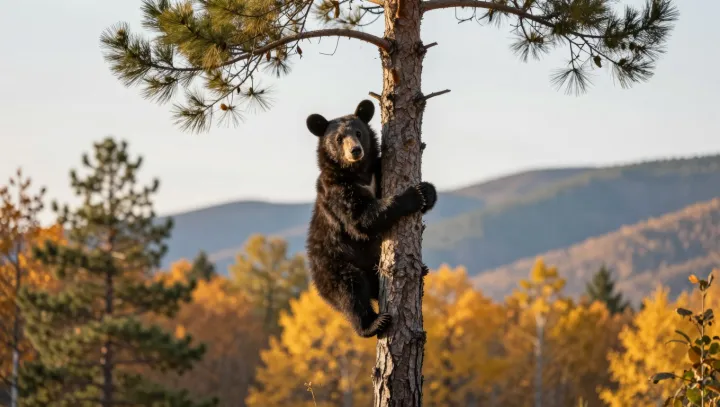
Soft fur lies. Power in this climb is not muscle bulk but how a black bear cub hacks contact with wood. Bark offers a rough, fibrous surface; every ridge increases frictional force, turning the trunk into a natural climbing rail where slippage is statistically rare.
Speed here is no mystery; it is geometry in motion. The cub’s claws curve into near hooks, increasing the effective coefficient of friction and creating shear resistance that functions like passive camming devices in rock climbing. With flexor tendons acting as biological load-bearing cables, each limb locks into the bark without the setup delay that human hardware demands.
The real unfair advantage is mass. A low body weight slashes the normal force driving claws to tear through bark, so the stress on each contact point stays below failure thresholds while still generating enough frictional grip. Humans with gear must distribute far greater gravitational load, manage harness angles, and constantly correct center of mass, burning time on every move. The cub simply sprints up the friction ladder and is gone.