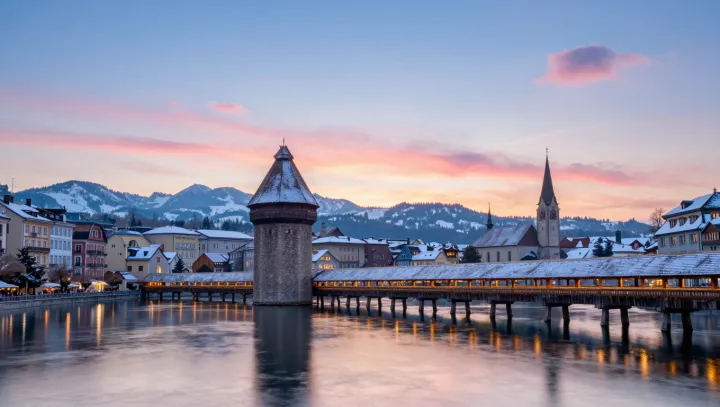
Lucerne’s waterfront looks underbuilt to many investors; that restraint is its profit engine. A low skyline, anchored by a medieval bridge and tower, creates a single, unmistakable visual signature that marketing departments elsewhere would pay to simulate with digital screens.
The city bets on scarcity. Height caps, strict zoning and view corridor protection compress development into a compact core, pushing land values up while keeping the lakefront visually quiet. That calm is not an aesthetic whim; surveys from local tourism boards show visitors rate “peace” and “walkability” as primary reasons to stay longer and spend more, outpacing shopping or nightlife in reported satisfaction.
What looks like nostalgia is in fact a sharp segmentation strategy. By refusing LED billboards and high‑rise competition, Lucerne filters for visitors and residents who value ambient light control, noise limits and reliable public transport over spectacle. That cohort tends to arrive with higher discretionary income, stay in smaller design hotels, and book cultural events in advance, smoothing seasonal demand and supporting a dense network of museums, orchestras and small retailers.
The waterfront’s medieval icons also function as free intellectual property. A single stone tower on still water, repeated endlessly on social feeds and brochures, delivers the kind of instant brand recall that many larger cities chase with expensive skyline races and animated façades yet rarely secure.