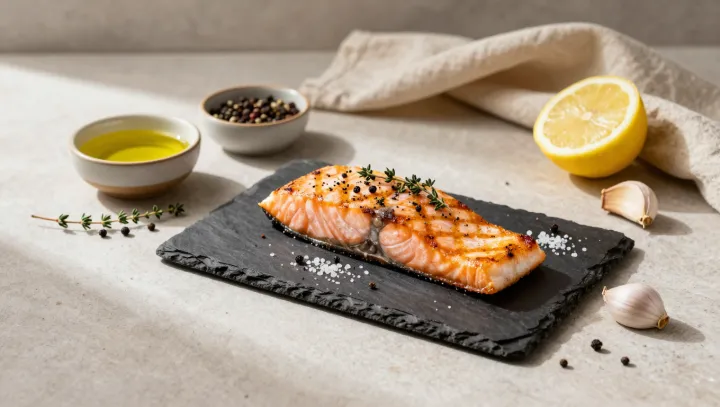
That golden crust on peppered salmon is less about aggression and more about control. A blistering-hot pan hits a thin film of olive oil, and together they form a contact bridge that boosts thermal conductivity while still buffering the fish from direct metal. The surface temperature spikes high enough for the Maillard reaction to race across the pepper and protein, generating browning compounds before the interior has time to lose much moisture.
More surprising is that this same setup behaves like a steam engine in miniature. As the salmon’s internal water heats, it turns into water vapor that pushes outward, but the pepper crust and seared protein network act as a semi-permeable shell, slowing that escape. Underneath, the temperature hovers near the phase-change range, so heat energy gets sunk into vaporization rather than simply driving the flesh past the point of protein denaturation.
The thin coat of olive oil matters more than cooks admit. Its relatively low specific heat lets it warm fast, yet it spreads energy across microscopic gaps in the pan, preventing scorched hot spots that would desiccate streaks of the fillet. That even, high-intensity conduction, paired with trapped internal vapor and a guarded crust, is what lets one side of the fish turn crisp and brown while the center stays tender and moist.