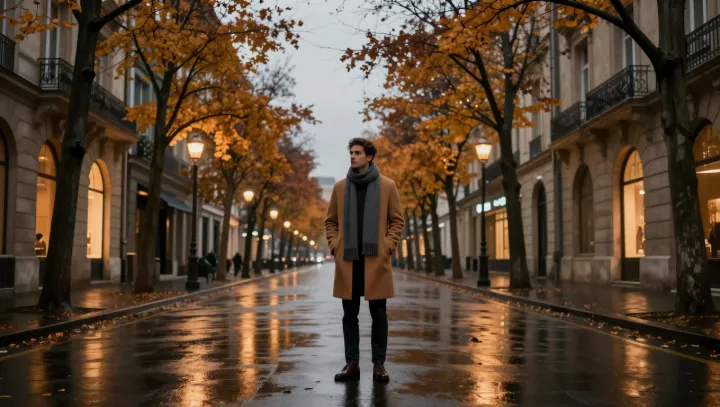
Rain on asphalt does the directing long before any human appears in frame. A wet street flattens light, turning small puddles into specular mirrors that stretch highlights and compress shadows, so a photographer can sculpt a single bright corridor inside an otherwise muted scene.
The supposed spontaneity is rarely accidental. By picking a wide‑aperture prime and standing close, many street shooters exploit perspective distortion and shallow depth of field, allowing one umbrella or coat to stay razor sharp while foreground figures smear into bokeh, a selective blur that acts like visual noise‑cancelling for the rest of the sidewalk.
Color does the quiet manipulation. A subject in saturated yellow or red is placed against cool, desaturated blues and greys, a practical application of simultaneous contrast and opponent‑process theory that makes that single figure pop even in low luminance, while reflections double the signal, echoing that color in the puddle at their feet.
What feels like a casual stroll is often a rehearsed route. Photographers pre‑visualize how a lamppost glow will bounce off wet stone, how a slight tilt of the frame will align a reflection with a face, how a mid‑telephoto focal length will compress distance so the viewer’s eye travels exactly along the path they sketched in their head hours earlier.