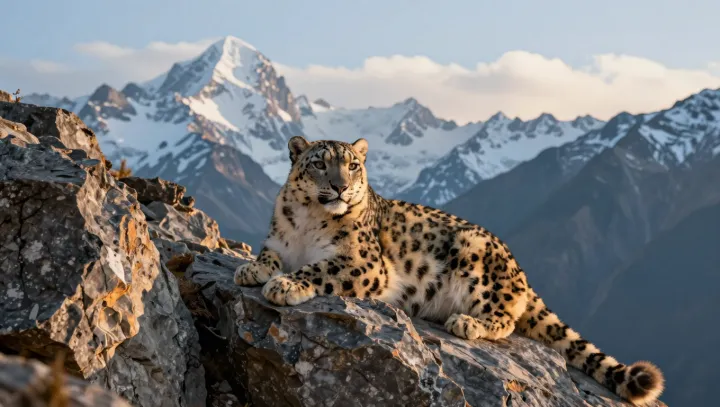
Bare rock should punish a sprinting predator; for a snow leopard it becomes a landing pad. Thickened digital pads act like layered rubber, while dense fibrocartilage under the metacarpal and metatarsal heads spreads peak impact forces that would otherwise fracture lighter bone or tear soft tissue.
The real surprise is how little of the cat actually slams into the cliff. Long hindlimb segments and an elongated calcaneus turn the leg into a catapult, storing elastic strain energy in the Achilles tendon complex and deep digital flexor tendons; much of the leap is powered by recoil rather than raw muscle shortening, which trims impact by moderating takeoff and landing angles.
Grip on near‑vertical slopes is not magic, it is friction engineering. Enlarged, roughened papillae on the toe pads increase the effective coefficient of friction, while semi‑retractable claws and a hyper‑mobile carpus let each digit micro‑adjust pitch, turning the paw into a multi‑point contact array that keeps traction even when only a few square centimeters meet the rock.