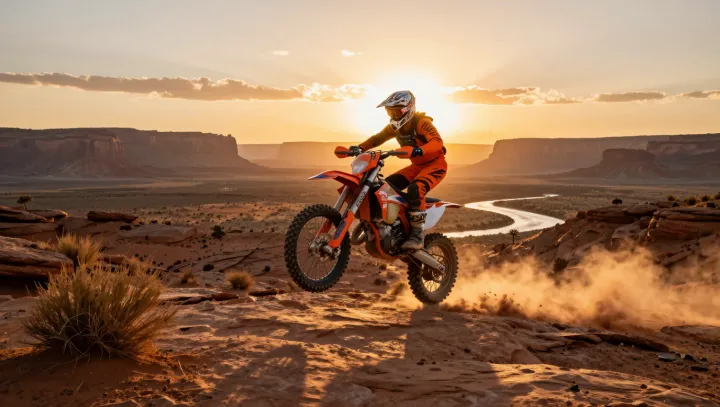
Roost, not risk, is the most misleading thing about high-speed off-road racing. What looks like full-commitment throttle is actually a quiet contest of neural latency and prediction, closer to a cockpit than a casual trail. Studies on elite riders show reaction times that rival fighter pilots, with responses compressed into fractions of a second while the bike bucks, slides and lands.
The harsh truth is that survival at race pace depends less on bravery than on sensor fusion. Vision, vestibular input and proprioception feed the motor cortex and cerebellum, creating a rolling internal model of the track that updates every heartbeat. Riders pre-load suspension before unseen ruts, bias weight to pre-empt a washout, and modulate throttle in sync with changing traction, executing continuous micro-adjustments that resemble closed-loop control in avionics rather than anything seen on a weekend ride.
The more speed rises, the less time exists for conscious choice. So the sport shifts into an exercise in feedforward control and muscle memory, where practiced movement patterns fire before hazards are fully visible. That is why race telemetry often maps clean, almost surgical inputs atop violent terrain: the surface screams chaos, yet underneath runs a system tuned for precision that feels, in cognitive terms, far more like air combat than leisure.