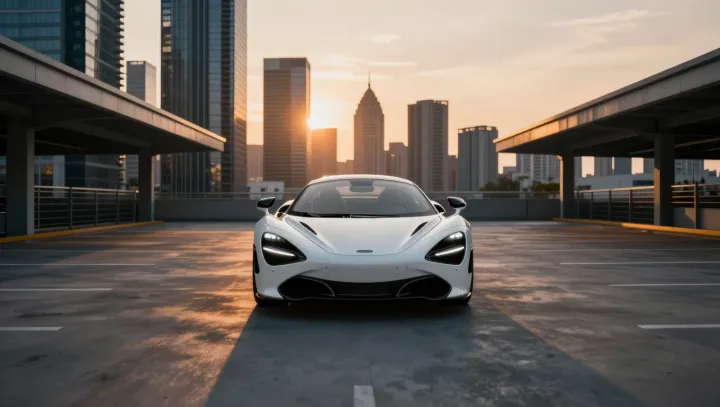
That limp throttle at sunset is not your imagination. Cooler evening air should raise power through higher air density, yet a rooftop garage turns the car into a rolling oven, with every thermal weak spot exposed at once.
Heat soak is the silent saboteur. After a hard drive, turbochargers, catalytic converters and exhaust manifolds radiate energy into nearby intake plumbing, so the air at the manifold is far hotter than the weather report suggests, killing charge density and lifting intake air temperature well past the calibration sweet spot for modern engine control units.
Parking under a hot concrete ceiling makes it worse. Conduction from the slab, trapped convective air and stored radiant heat from sun-baked surfaces keep under‑hood temperature elevated, so intercoolers, radiators and even fuel rails start from a thermal handicap, forcing knock control, retarded ignition timing and richer air‑fuel ratios that trade power for survival.
Supercars are hit hardest because they are already near the edge. High specific output, tight packaging, minimal under‑hood volume and dense aerodynamic undertrays restrict airflow once the car is stationary, so low‑speed or parked conditions give almost no fresh air for convective cooling while residual exhaust gas heat continues to migrate into wiring, sensors and compressor housings.
Step outside that garage and the physics flips. With a brief cooldown drive and real airflow across heat exchangers, the same cooler evening air finally reaches the cylinders at something close to ambient temperature, and only then does the theoretical power gain on the spec sheet show up at the wheels.