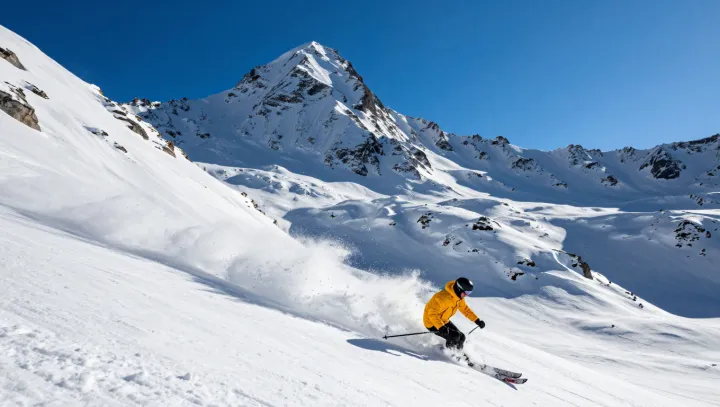
Snow, not courage, sets the terms on a steep face. As the slope pitches, gravity drives a brutal spike in acceleration, but experts respond with something that looks almost timid: tiny, high-friction edge turns that slow the skis while keeping the body oddly quiet above the chaos.
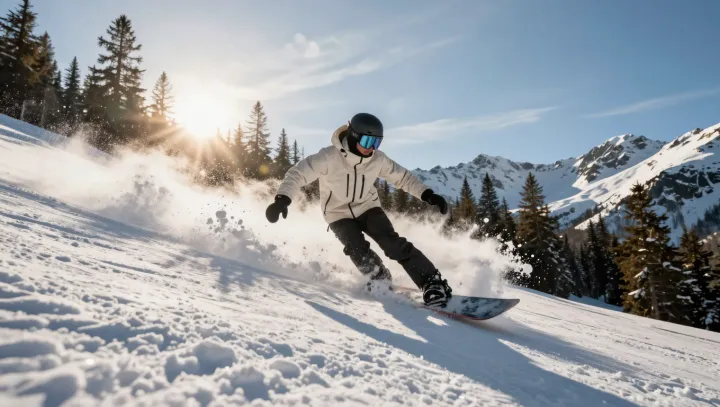
The counterintuitive truth is that going “fast” down the hill often means staying slow across it. By snapping short-radius turns, skiers increase edge angle and kinetic friction, bleeding speed sideways while keeping the center of mass traveling on a smoother, more predictable arc. The skis jitter and carve; the torso floats, nearly level, because the lateral acceleration is managed in controlled pulses instead of random jolts.
Falls drop when control of the center of mass outranks the chase for straight-line speed. Those quick edge sets create repeated ground reaction forces that act like metronome beats, letting the vestibular system and proprioception lock onto a rhythm. Instead of one huge, catastrophic loss of grip, there are dozens of micro-corrections, each turn a small reset that re-centers balance over a slope that, to outsiders, looks unmanageable.