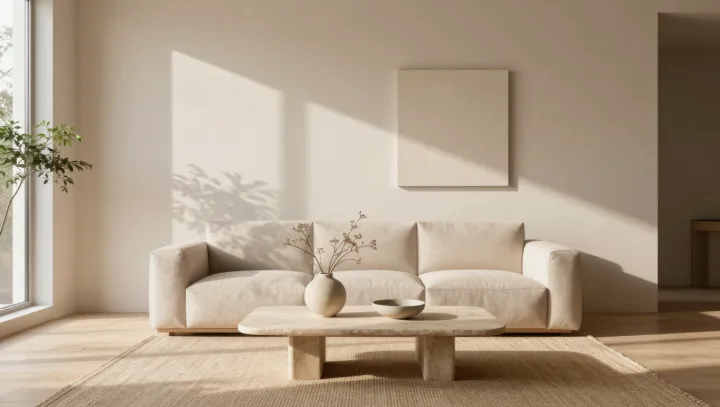
Luxury begins with subtraction, not spending. A bare living room that keeps only warm daylight, a low quiet sofa and one textured rug exploits a basic rule of perception: the brain reads empty space as value. When visual noise drops, the remaining objects gain weight, the way a single voice sounds richer in a silent auditorium than in a crowded bar.
Silence is the real upgrade. With no gallery wall, no console, no cluster of side tables, the room becomes a container for light and proportion, the two metrics architects treat as non negotiable. Soft daylight washes uninterrupted across the floor, turning the rug into a topography of shadow and fiber, while the low sofa flattens the sightline so the room itself, not the seating, becomes the main event.
Costly pieces, when multiplied, cancel one another out. A dozen designer objects compete for attention and trigger what cognitive scientists call attentional load, which the eye experiences as fatigue, not wealth. One well made sofa and one tactically rough rug, surrounded by deliberate emptiness, signal something different: that the owner can afford not to show everything. In luxury, restraint is the loudest flex.