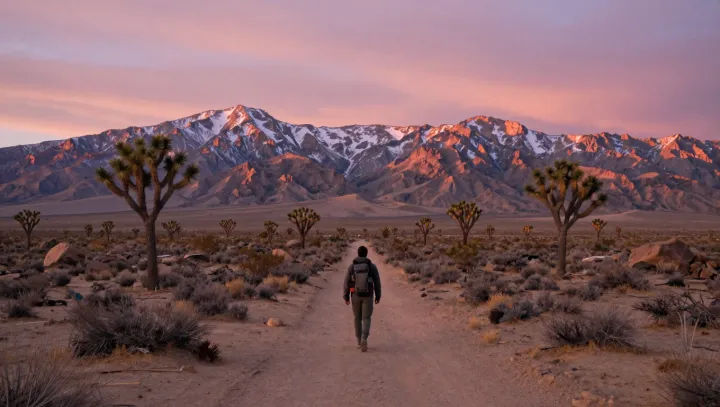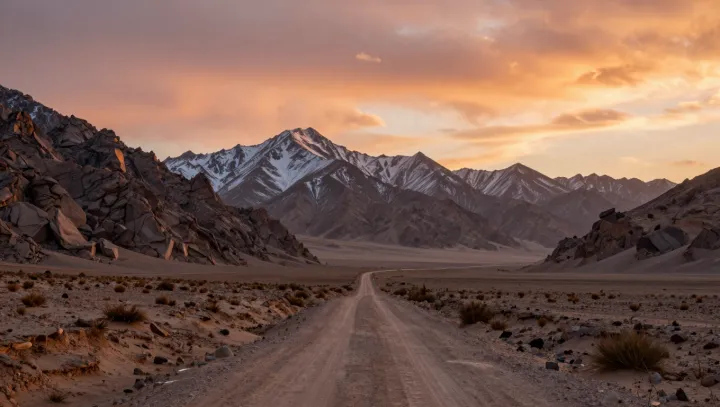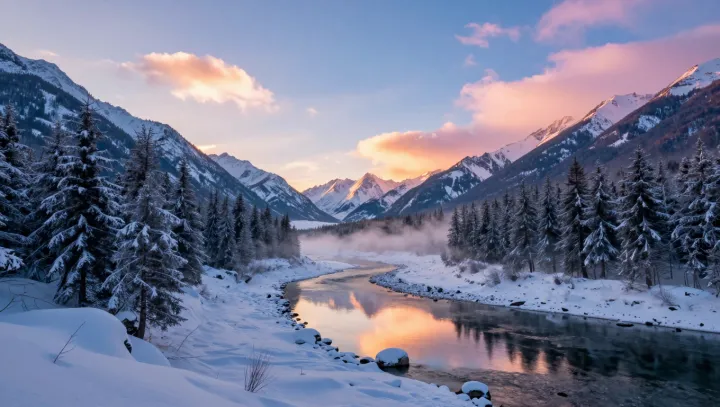
Color reaches the valley before any direct ray of the Sun. Over the ridge, unseen from below, sunlight already enters the high atmosphere and interacts with air molecules and ice crystals that hang above the shadowed snowfield.
What looks like some mystical blush is really strict geometry and scattering at work. Long before direct illumination arrives, the upper air sits inside the Sun’s beam while the valley floor remains inside Earth’s umbra, so only light that has been bent or redirected can reach the ice and rock below. Shorter wavelengths suffer strong Rayleigh scattering in the rarefied upper air, sending blue light sideways and down into the shadow. At the same time, longer red and orange wavelengths, stripped of much of their blue content by this same process, skim through thicker layers of atmosphere and are refracted and softly redirected by Mie scattering from aerosols and tiny ice crystals near the horizon.
That is why the sequence feels inverted. First comes a faint blue wash, born of Rayleigh scattering from high altitudes, then a rising belt of pink and rose as red-heavy light grazes the atmosphere and catches the flanks of distant peaks. Only later does direct, white-gold illumination clear the mountain edge. The valley does not wait for the Sun; it simply takes the light the sky has already edited.