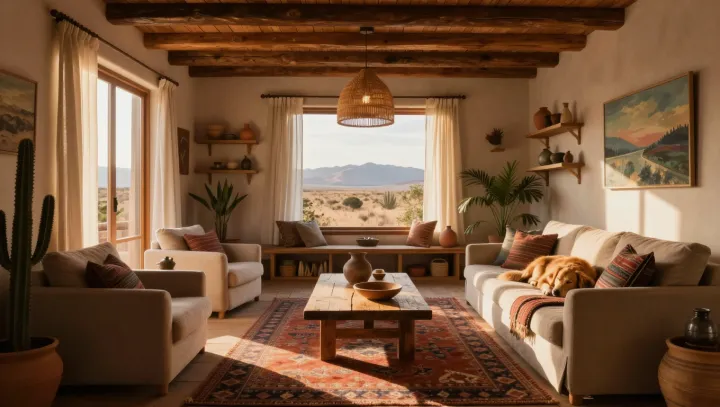
Light on fur does more than light on stone. In the sunlit, sand-colored room, it is the dog, not the coffee table, that quietly owns the visual field, because the brain is built to track animals before objects and motion potential before static form.
Designers may argue for the statement chair, yet neurobiology gives the edge to the sleeper on the rug. Motion-sensitive circuits in the superior colliculus and the premotor system keep a low-grade watch on that breathing body, and once the threat appraisal system in the amygdala reads it as safe, attention can idle there with minimal metabolic cost, like a cursor resting on a trusted icon.
Calm, here, is not an abstract mood but a measurable shift. Heart rate slows as oxytocin and parasympathetic activity rise in response to that slow flank movement and the soft, irregular breathing pattern, which offer micro-variations that hold focus without demanding it, a kind of biological screensaver that keeps boredom and hypervigilance equally at bay.
By contrast, the sculptural lamp or rare book asks for constant, effortful evaluation: price, status, taste, social risk. The dog asks for none of that. It functions as a psychological ground wire, absorbing spare cognitive charge, closing the loop between vigilance and rest, and turning the whole desert-toned room into a place the nervous system can finally stand to stay.