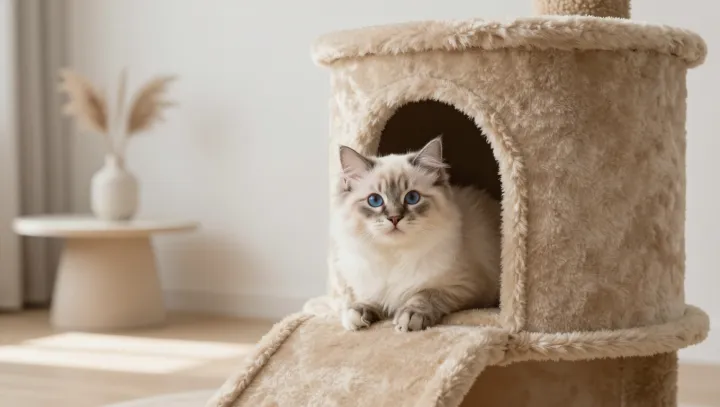
Those dreamy blue kitten eyes are mostly an optical trick, not destiny. At birth, the iris carries very little melanin, and the collagen-rich stroma scatters incoming light in a way described as Tyndall scattering, sending shorter blue wavelengths back to any onlooker.
Misleading, though, is the idea that blue signals a fixed genetic outcome. The genes controlling melanin synthesis and melanocyte activity are already set, yet they express only partially in the early iris, where melanocytes sit quiet in the stroma and pigment epithelium. As these cells ramp up tyrosinase-driven production of melanin granules, light absorption increases, and the apparent color shifts toward green, amber, or deep copper, depending on how densely those granules pack into the tissue.
Striking, too, is how little structural change the eye needs to look transformed. The cornea stays clear. The lens stays clear. What changes is pigment density in a thin ring of tissue, altering the balance between scattering and absorption. High melanin turns eyes golden or brown; moderate levels yield hazel or green. Only when melanocytes remain largely inactive does the kitten keep that original blue, a reminder that what looked like a permanent trait was, in many cases, just unfinished biology.