A red scarf cuts across the snow. Snow gets outvoted here. Set against blue-white ground, its hue summons learned links to fire, flushed skin, and sunlit surfaces; color-temperature association then tilts interpretation, although no pixel has raised the air temperature. The contrast is doing it. No air has moved.
Shelter is the sharper trick. A roof edge, amber window, or narrow path between drifts tells the visual system that exposure has limits, and Bayesian inference converts those environmental hints into an expectation of refuge. Brains wager on context. Cool colors often carry associations with shade, ice, and distance, so the opposition matters as much as the scarf itself. In predictive processing, sensation is not merely received; it is weighed against prior experience, which is why a painted interior can seem to soften a frozen exterior. The image offers security, not heat.
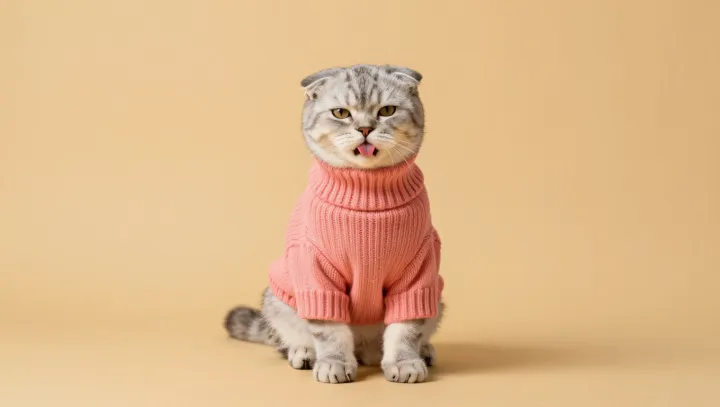
The cat seals the case. Its curled posture, fur, and unhurried sleep suggest thermoregulation has succeeded, while its vulnerability implies an absence of immediate threat; viewers may answer those signals with a faint interoceptive sense of ease. A resting animal also makes the scene appear inhabited rather than hostile, a small narrative cue with outsized force. This is not foolishness. Perception constantly joins visual cues to bodily expectation, and the result is a scene that feels warmer without becoming warmer. Snow remains snow, while comfort quietly enters the frame.