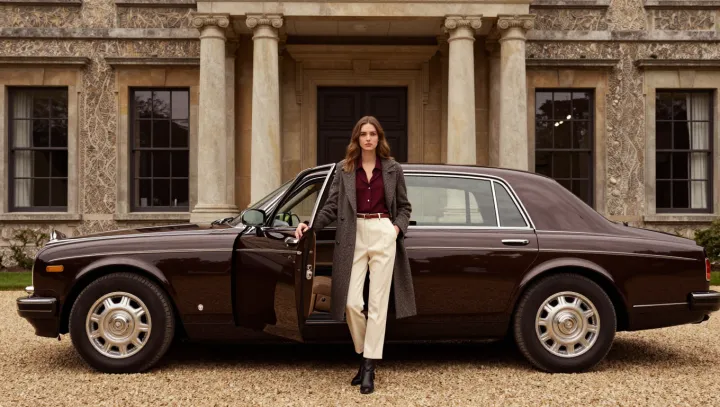
The sleeve speaks first. Its curve softens the arm, yet the padded shoulder above it holds the body upright, turning a familiar vintage signal into an argument about authority. Fragility is the wrong reading. Where bias-cut fabric loosens against movement, a tailored jacket counters with canvas interfacing, seam allowance, and a measured shoulder line; posture follows construction before it follows mood.
Softness gains force through resistance. A nipped waist or full skirt can suggest romance, but tailored suppression directs the eye vertically, while a firm lapel establishes visual hierarchy around face and chest. The trade calls this proportion. It is closer to architecture than costume: drape supplies motion; structure sets load paths; together they prevent nostalgia from collapsing into dress-up. Such pattern engineering distributes visual weight, making delicacy legible as choice rather than concession.
That distinction matters. Fashion often favors the easy relic--bows, lace, faded florals--because the signs photograph well, whereas the harder work lies beneath: correct grainline, internal support, and alterations that let a garment answer an actual body. A copied image cannot do that. This is not conservative dressing. It is a refusal to mistake ornament for submission or softness for surrender. Power need not shout. In a room full of loosened shapes, the woman whose clothes hold their line can seem neither armored nor ornamental, only fully arrived. The sleeve, quiet at the wrist, has already made its case.