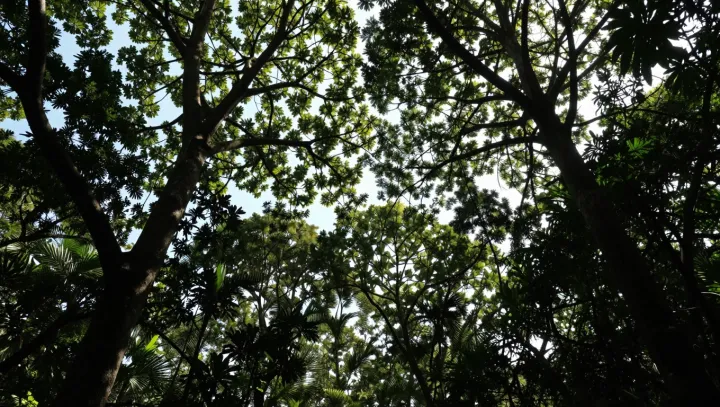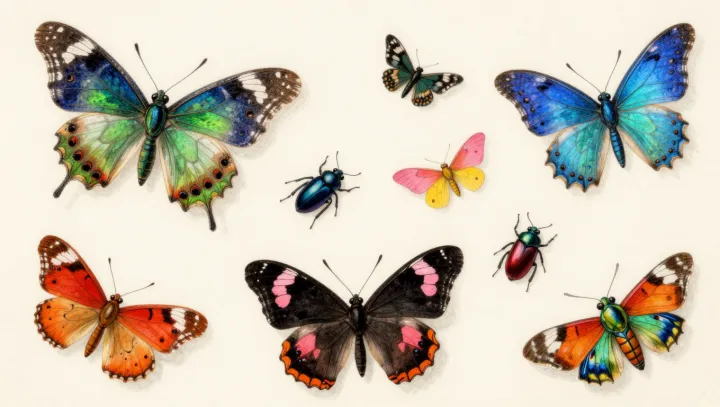
Small animals change the terms. A beetle crossing a leaf or a mouse working through dry grass gives the eye a bounded event, and that modest drama can make a forest seem less like an unknowable mass. Fear shrinks first. When attention finds a creature that appears vulnerable rather than predatory, threat appraisal may ease, because the scene supplies evidence that the surroundings are usable, inhabited, and not wholly hostile. The animal becomes a scale marker. Vast trunks, shadow, noise, and tangled growth remain, yet they acquire a reference point that the mind can hold.
The comfort is not childish. It reflects perceptual fluency: people often respond more calmly when a complex scene offers a readable pattern, even a fleeting one. Watch the sparrow. Its ordinary movements can pull attention away from imagined danger and toward immediate detail, a process related to attentional restoration and reduced stress response. Nature is not made harmless by a small body. It is made graspable. In that brief exchange, the forest stops being an abstraction and becomes a place where one small life has found its way.