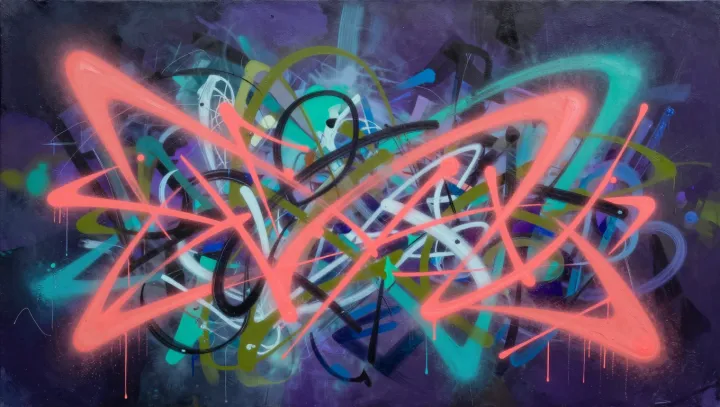
An uncleaned wall does not stay blank for long. Once marks remain in view, the surface begins to advertise permission: not legal permission, but the practical belief that another hand can act without immediate consequence. A reachable wall lowers the cost of entry. Marks invite company.
The stronger explanation is contagion, not sudden mass inspiration. In behavioral science, social proof describes how visible conduct supplies a shortcut for judging what is tolerated; on a wall, each surviving mark can shift that judgment, especially where access is easy and cleaning appears absent. Territoriality matters, too. Writers may answer, cover, or position work beside prior pieces, turning a bare vertical plane into a contested record. This does not prove that every mark causes the next, but it explains why imitation can feel cheaper than invention.
The material is not innocent. Its condition signals maintenance capacity, enforcement risk, and the chance that a mark will remain visible long enough to matter. That creates path dependence: early residue changes later choices, while removal interrupts the signal before repetition gains momentum. Paint gathers where silence resembles consent, and the wall, left unattended, speaks in layers.