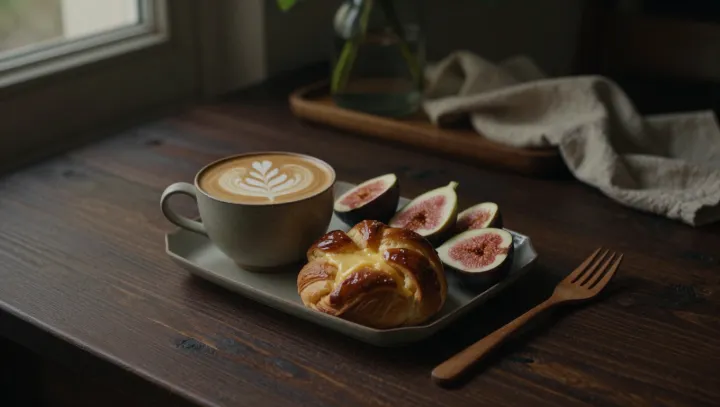
The split fig argues. Its dark flesh clings to the knife, while tiny seeds interrupt a paste of concentrated sugars, presenting the same visual promise as a coffee bean taken deep into roast or a tart pulled from the oven. This is not a pairing invented by habit. Habit came later.
The match is chemical. As fruit loses water during ripening and drying, sucrose, glucose, and fructose become more forceful, while acids remain present enough to stop sweetness from turning dull. Acidity keeps watch. In a roast, caramelization reshapes sugars under heat, and the Maillard reaction joins reducing sugars with amino acids to produce browned notes, volatile aromatics, and a faint bitterness; baked dough follows a related route, though its fats and starches change the register. Figs arrive carrying an edible echo of those transformations.
That is the trick. A fig beside espresso does not merely add sweetness; it broadens the roast's dried-fruit tones, softens bitter edges, and lets acidity behave less like a warning than a clean line drawn through ink. Pastry benefits differently. Against butter, flour, and toasted crust, the fruit supplies chew and concentrated flavor without demanding extra syrup. No garnish can fake it. The plate then holds two kinds of heat: one remembered by fruit, one made moments before, meeting in the quiet dark.