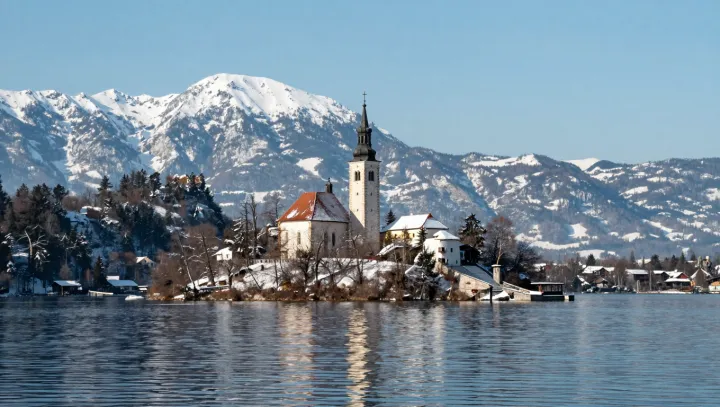
Lake Bled owes its island to an uneven contest between ice and rock. The glacier did not simply scoop out a bowl: as it moved through the basin beneath the Alps, it wore some parts of the bedrock down more deeply than others. One rise remained. Water later surrounded it.
The ice was a sculptor, not a precision instrument. A branch of the Bohinj glacier flowed into the Bled basin, where abrasion by rock fragments embedded in the ice helped grind the ground beneath it. Plucking also mattered: ice could grip fractured bedrock and pull pieces away. Differences in rock strength, fractures and the movement of ice helped determine where erosion was most effective. The rocky rise that became the island survived above the deepened basin, though its exact history cannot be reconstructed from the present view alone.
The church came much later, and its setting makes the geology easy to overlook. After the ice retreated, meltwater and other water sources occupied the basin, leaving the surviving rock exposed as an island. A church dedicated to the Assumption of Mary now stands there, reached by boat and a stone stairway. Snow can soften the shores and hide the details of the surrounding mountains, but it cannot erase the contrast that made the scene possible: where ice removed rock, water lies; where rock endured, a church rises.