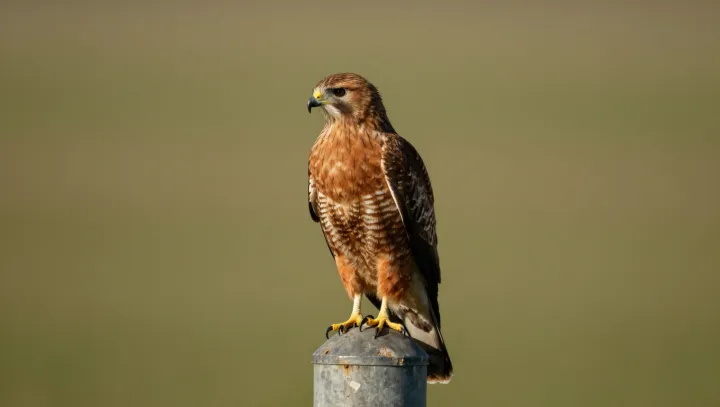
A hawk's cry does not always belong to a hawk. Sometimes a blue jay delivers the imitation, turning a familiar woodland alarm into a puzzle about who benefits from the sound. The explanation is not settled. Warning, deception and other possibilities remain on the table.
The warning hypothesis is tempting but incomplete. Blue jays are vocal birds that respond to predators, and a call resembling a hawk's might alert nearby animals to danger. Yet resemblance alone cannot establish intent: a convincing test would need to show when jays use the imitation, whether a predator is present and how other birds respond. Deception offers another possibility. If smaller birds leave a feeding site after hearing the imitation, a jay could gain access to food, though that outcome would not by itself prove the call evolved for that purpose.
The strongest answer may be less tidy than either story. Vocal mimicry can produce acoustic signals that affect listeners differently, and predator recognition depends on what those listeners hear and how they interpret it. A jay might imitate a hawk in several contexts, or the sound might have a function researchers have yet to establish. The original caller is distinctive enough: the red-shouldered hawk, Buteo lineatus, is a North American raptor with reddish barred underparts and boldly patterned wings. The sound alone cannot identify its maker. In the trees, a cry can carry the shape of danger without revealing the bird behind it.