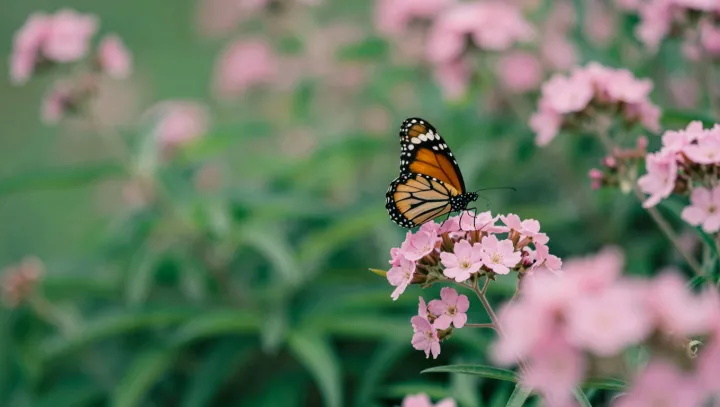
The monarch's greatest feat offers no protection from its greatest threat. Its orange wings, crossed by black veins, carry it toward wintering grounds it has never seen, yet the habitats that sustain that journey are shrinking. The route is inherited. The safety of its destinations is not.
The navigation system is more remarkable than a simple instinct to fly south. Monarchs use a time-compensated sun compass: they track the sun's position while a circadian clock, supported by mechanisms in their antennae, helps adjust their bearing as the sun moves across the sky. No guide leads them. The butterflies that migrate are several generations removed from those that made the previous journey. How they locate particular wintering sites remains less certain; inherited orientation does not by itself explain every detail of their arrival.
A functioning compass is of little use without places to feed and breed. Milkweed is the sole food source for monarch caterpillars, and its loss from parts of the breeding range reduces opportunities for reproduction; adult butterflies also need nectar along their route. Weather can compound the damage. Drought, storms and extreme temperatures can kill monarchs or disrupt the plants they depend on, while forest loss threatens the shelter used by eastern monarchs in Mexico. Protecting milkweed, nectar plants and wintering habitat helps preserve not merely a butterfly, but a journey passed between generations. The wings know the way. The path must still be there.