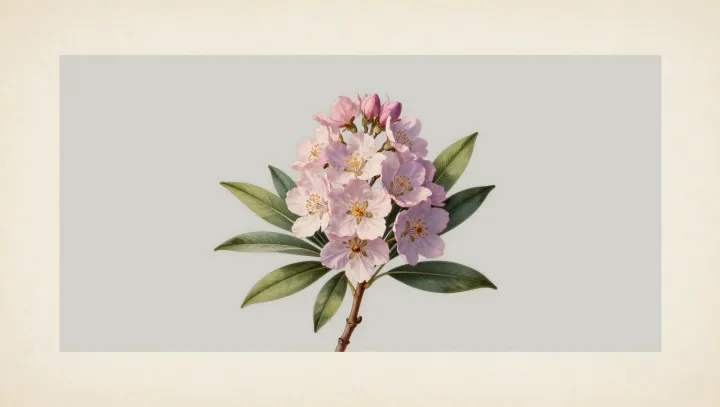
A wild spring azalea from Chinese hillsides now underpins a vast share of modern ornamental azaleas sold in garden centers worldwide. Its genome, once locked in scattered native populations, has been repeatedly crossed, dissected and recombined by breeders to supply color, cold tolerance and flowering rhythm.
The shrub’s rise began when horticulturists recognized its unusually flexible flowering phenology and broad genetic variation in traits such as bud hardiness and pigment pathways. Through deliberate hybridization and backcrossing, they used it as a donor parent, driving gene flow, or introgression, into diverse Rhododendron lines. Traits like extended bloom duration and compact growth habit proved to have strong heritability, which allowed breeders to stack them systematically across generations.
Modern breeding programs now treat the spring azalea as a living library of alleles. Using tools such as quantitative trait locus mapping and marker-assisted selection, they track chromosomal segments from the wild shrub as these segments move through complex hybrid pedigrees. The result is a global palette of azaleas that look radically different above ground yet share the same genetic cornerstone below the soil line.