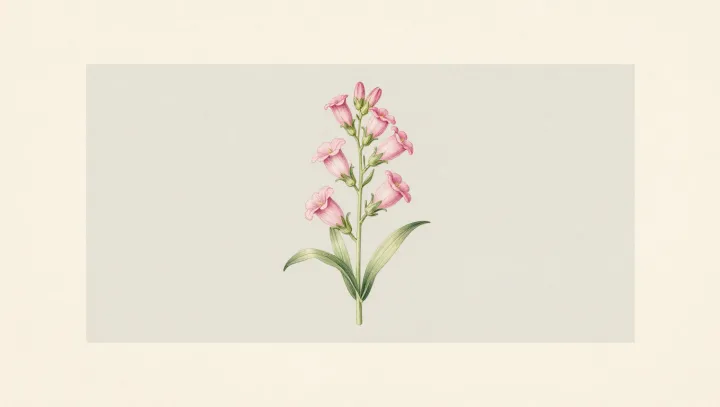
A small shrub in the heath family has turned its bell-shaped flowers into precision devices aligned with local pollinators. The downward tube, narrow opening and recessed anthers form a controlled gateway that fits the body size and feeding posture of resident bees and flies, translating each visit into highly directed pollen transfer.
Behind this fit is familiar evolutionary accounting: variation in corolla length and aperture, in nectar volume, and in the daily timing of flower opening shifts the basic reproductive rate of the plant, in a way not unlike a change in basal metabolic rate reshapes energy budgets. Individuals whose floral geometry best matched the proboscis length, foraging route and activity window of local insects left more seeds, incrementally biasing the gene pool toward that particular bell form.
Ecologists describe this as a marginal effect of selection acting on morphology and phenology rather than on pollinators directly. Over many generations, even slight advantages in pollen deposition or receipt accumulated, stabilizing a narrow range of tube depth, stigma position and nectar renewal rate. The result is less a romantic partnership than a negotiated equilibrium, in which the shrub’s bells and its pollinators’ feeding behavior remain locked in a quietly efficient exchange.