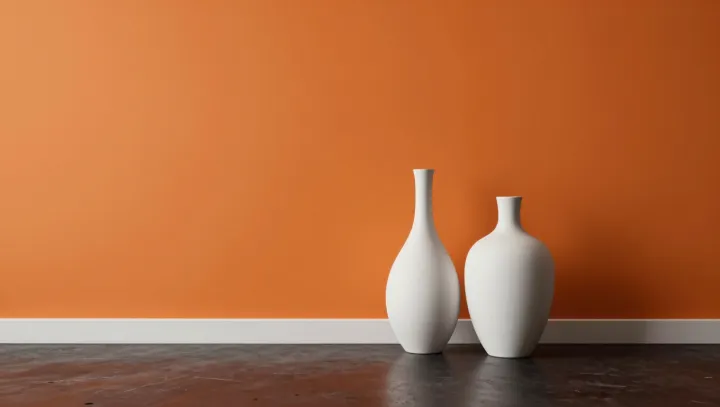
A plain Nordic white ceramic vase can quiet a room long before anyone notices it. The light reaching the retina is not fundamentally different from that bouncing off a patterned, colorful vase, yet the brain’s response diverges. The key lies not in the amount of light but in how information is organized when it hits the visual system.
In minimalist objects, the visual cortex encounters low visual entropy: fewer edges, simpler contours, limited chromatic variation. That reduces prediction error in the brain’s predictive coding machinery and lowers cognitive load. Neural circuits in the default mode network and limbic system are not forced to resolve conflicting signals, so autonomic arousal can drop. The object feels calm because the brain is not burning energy on interpretation.
Ornate, colorful vases, by contrast, drive more feature extraction in early visual areas and demand more top‑down attention. The brain chases texture, hue shifts, and micro‑patterns, increasing micro‑saccades and metabolic demand in neural populations. Minimalist white ceramics effectively act as a perceptual buffer, stabilizing sensory input and giving regulatory systems like the parasympathetic nervous system more room to keep internal homeostasis steady. The vase does not change the light; it changes the informational workload.