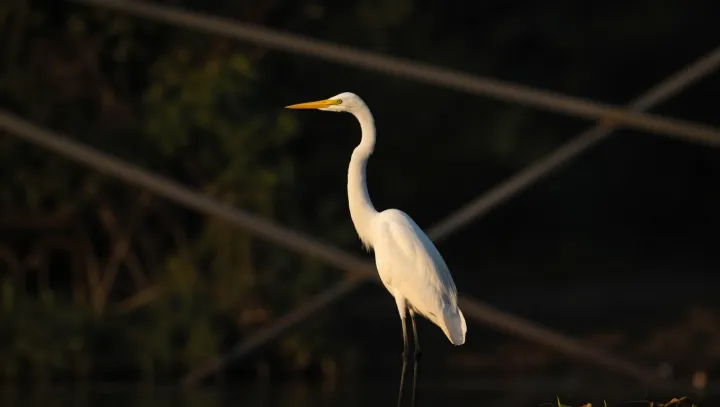
One small heron broke ranks. The cattle egret walked out of the shallows and into the grass because the numbers made more sense than tradition ever could. Herds of cattle, buffalo and wild ungulates kick up dense swarms of orthopterans and flies, turning each moving hoof into a foraging subsidy that no wetland can match in prey density per step.
This bird is not simply quirky; it is an efficiency specialist shaped by ecology and biomechanics. Shorter, thicker neck, compact bill, and relatively blunt toes reduce drag and snag risk on uneven ground, while still allowing rapid pecking strikes that ethologists quantify as very high attack rates per minute. Instead of relying on aquatic sighting through refraction at the air–water interface, the cattle egret exploits terrestrial visual contrast, tracking insects flushed by mammal movement in a kind of biological arbitrage on disturbance energy.
Herons stayed with fish because most are locked into wading morphology and niche conservatism. Long tarsi and spear-like bills are optimized for sit-and-wait predation in shallow water, supported by limb bone allometry tuned for vertical stance rather than constant walking. The cattle egret, once associated with drier habitats, could leverage a preadapted body plan to follow livestock, gaining a closed-loop supply of insects, reduced aquatic parasite exposure, and access to freshly opened continents of pasture as human agriculture expanded.