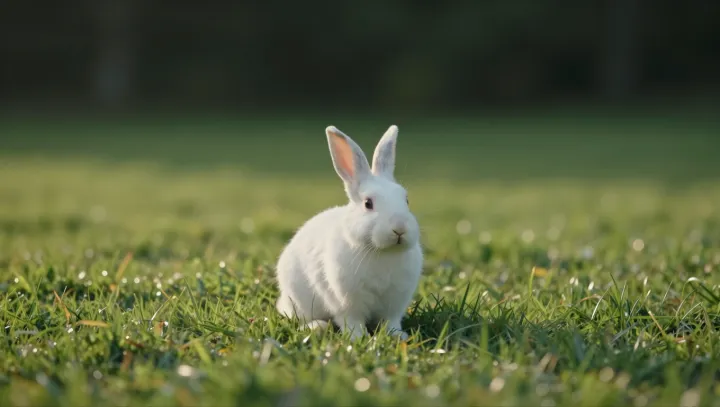
That neat ring of untouched grass around a rabbit burrow is not an accident. It is a defensive design, one shaped by predation more than by appetite. Field biologists describe a consistent pattern: rabbits graze intensively at some distance from their burrow mouth, while leaving a narrow collar of denser vegetation right at the opening. To a hawk or fox scanning for the dark contrast of a hole, this untrimmed patch acts as a visual filter, breaking up the circular outline that would otherwise betray the den.
Predator vision, not rabbit taste, drives this behavior. Many mammalian hunters rely on edge detection and contrast sensitivity, the same visual principles used in computer vision algorithms, to pick out openings and movement in cluttered ground cover. By refusing to crop their front yard, rabbits maintain a layer of occlusion that reduces line of sight into the burrow and blurs its boundary against the soil. Ethologists link this pattern to classic antipredator theory, in which any behavior that marginally lowers detection probability can be strongly favored, even if it forces animals to travel farther to feed. The result looks like neglect. Functionally, it is architecture.