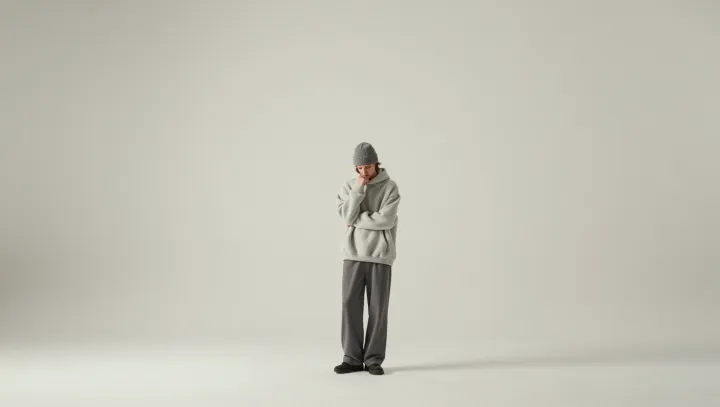
Gray cotton, not black, now sits at the center of off-duty styling logic. Stylists quietly treat the gray sweatshirt set as a system default, a kind of fashion safe mode that rarely crashes, even on camera or under harsh retail lighting.
The blunt truth is that black is less forgiving than its reputation suggests. Pure black increases contrast against many complexions, which means sharper visibility of under-eye shadows and texture; by comparison, mid-gray lowers luminance contrast and softens facial edges in photographs, an effect supported by basic colorimetry and contrast sensitivity research. White fails another test: it highlights every coffee drip and sidewalk splash, raising what stylists half-jokingly call the “maintenance tax” on an outfit. Gray, especially heathered knits, statistically hides stains and laundering wear longer because visual noise in the marled yarn camouflages minor discoloration.
Stylists also argue that gray behaves like social camouflage. Street-style images and retail sell-through reports show that neutral heather tones move consistently across age brackets and body types, while saturated colors spike and crash. A gray set frames sneakers and bags without competing for attention, which lets professionals leverage accessories for trend rotation while keeping the base look stable. For off-duty clients who live on short commutes between gym, set, and airport lounge, that low-variance reliability is the point: one color, minimal risk, maximum usable hours.