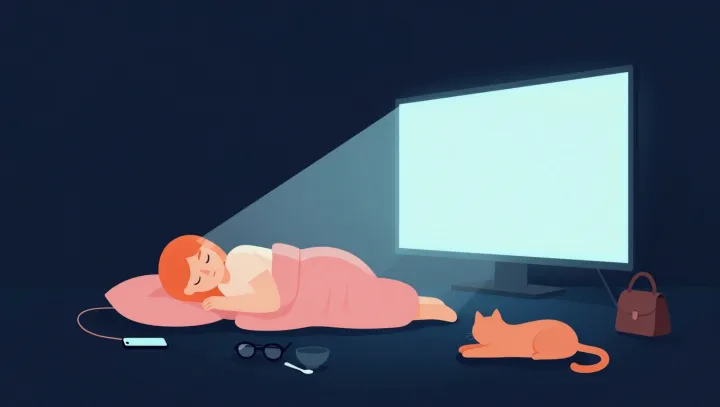
Sunlight cheats. Your feed cannot. A short blast through glass triggers machinery in the skull that hours of curated content barely touch.
At the center is a blunt fact: mood is chemistry, not aesthetics. When real sunlight hits the retina, intrinsically photosensitive ganglion cells fire, sending signals into the suprachiasmatic nucleus and dorsal raphe, where serotonin synthesis and circadian rhythm alignment are coordinated in the same neural circuits that regulate sleep pressure and core body temperature, so even a brief, high‑lux exposure can tilt the entire system toward wakefulness and emotional stability.
By contrast, feel‑good clips mostly ride on dopamine prediction error in the mesolimbic pathway. Short. Shallow. They spike attention but leave the serotonergic and noradrenergic tone that underpins sustained mood almost unchanged, and the low, constant luminance of a screen never reaches the illuminance threshold needed to reset circadian clocks or suppress melatonin, which is why binge scrolling can coexist with fatigue, headache and anhedonia even while the content looks upbeat.
The harsher claim is that your window beats your phone because photons ignore your stories. Lux level, spectral composition and timing feed directly into hormonal release, synaptic plasticity and gene transcription in clock genes, while emotional narratives on a screen must first be interpreted, filtered by bias, then diluted across attention spans that fragment every few seconds.