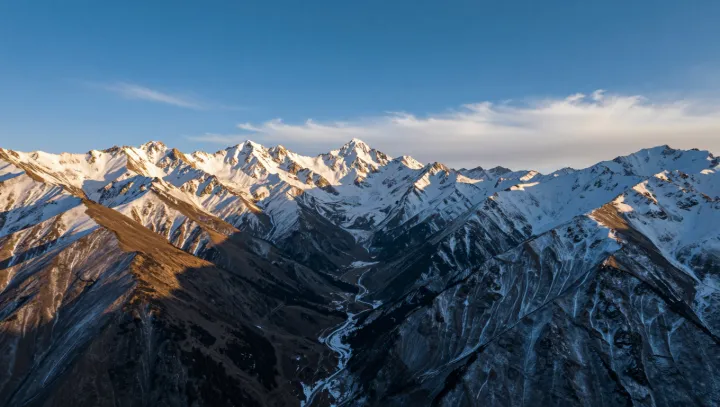
Thin air cheats instinct. Around those snow ridges, water inside you approaches a boil at temperatures that feel almost ordinary. Low atmospheric pressure reduces the external push on every liquid molecule, so the vapor pressure needed for boiling is reached sooner, long before the comforting benchmark of one hundred degrees on a sea‑level stove.
Ice, by contrast, is stubborn. Its phase change depends less on pressure swings in this range and more on temperature, so glaciers stay frozen while your own fluids edge toward trouble. The same thermodynamic equations that fix the boiling point barely nudge the melting point of solid rock or compacted snow, leaving cliff faces and cornices immobile while blood, plasma, and lung moisture flirt with phase change inside a warm, stressed body.
That mismatch is the real danger. Your core temperature must hold within a narrow band, yet the Clausius–Clapeyron relation quietly shifts the boiling threshold downward as you climb, shrinking the safety gap between normal physiology and literal internal boiling. On those high summits, it is not the ice that seems unstable, but the human body perched among it.