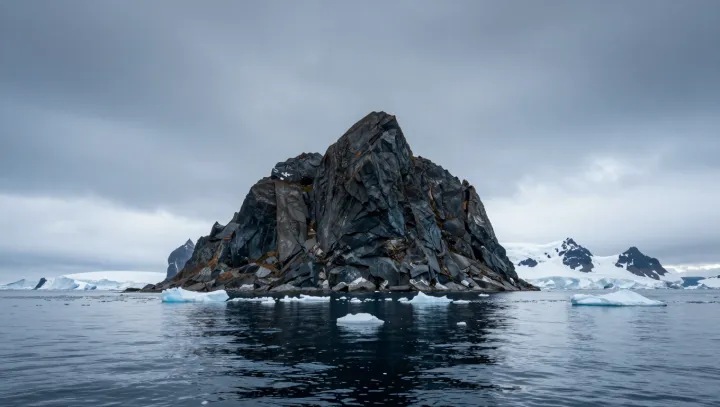
Bare polar rock is not dead terrain at all; it is premium real estate for microbes. On sunlit faces above icy seas, mineral grains fracture, trap brine, and create micron-scale pockets where temperature, salinity, and pH swing sharply across tiny distances, a pattern that supports stacked niches far tighter than the coarser structure of many temperate soils.
The bold claim is that rock can beat soil on density, and microbiology backs it. Endolithic communities pack into fissures and quartz inclusions, forming laminated biofilms that use photosynthesis near the surface and chemolithotrophy deeper down, so multiple metabolic guilds share the same square inch with almost no wasted space. In contrast, temperate soil often contains large air gaps, plant litter voids, and macrofaunal burrows that dilute microbial occupancy at fine scales.
Even the cold helps. Slow enzyme kinetics and low nutrient flux favor organisms that invest in tight adhesion, extracellular polymeric substances, and long-lived cells, so once a crack is colonized it stays filled, turning the rock into a near-permanent micro-archive of biomass. Temperate soil turns over faster, mixes more, and loses many cells to predators and disturbance, leaving its apparently rich surface less densely packed in the square-inch accounting that microbes quietly win on the polar stone.