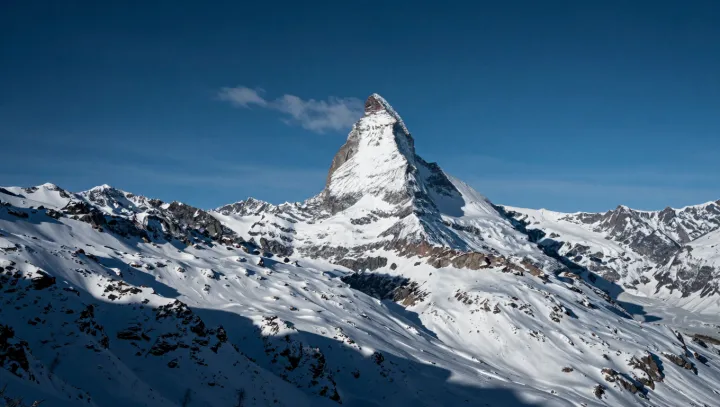
A frozen peak lies about as still as anything on Earth, yet its apparent stillness is a visual lie. Under the ice and thin air, tectonic plates push together, driving crust upward through orogeny while the lithosphere flexes in isostatic rebound as glaciers thin or retreat.
The counterintuitive part is simple. Rock flows. Given enough pressure and time, mineral grains in granite and gneiss deform by plastic creep, sliding along crystal defects so the entire mountain mass behaves like a super‑viscous liquid. Short, sharp fractures mark brittle failure near the surface, where joints and faults open as stress exceeds rock strength and blocks topple downslope.
Yet the real sculptor is ice, and it works like a ruthless machine. Glacial abrasion grinds the bedrock with rock fragments frozen into the basal ice, while plucking wrenches entire slabs from the lee sides of ridges. Gravity keeps the system running: debris moves through rockfall, landslides and slow, granular flows, feeding talus cones and valley trains. What looks like a permanent monument is just a temporary shape caught in transit.