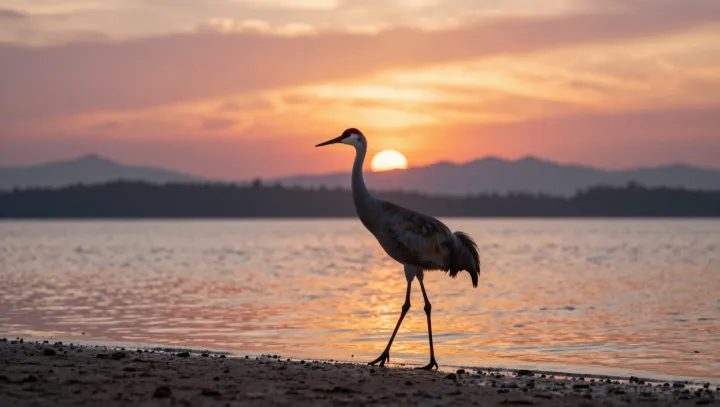
Golden light or not, the pose is pure physics. One bare leg tucked tight against the body cuts conductive heat loss to the waterlogged ground, while the extended limb runs a quiet engineering trick called countercurrent heat exchange. Arteries carrying warm blood descend beside veins returning cold blood, so most heat is transferred back before it ever reaches the toes.
Feather fluffing is no quaint sunset ritual; it is a deliberate expansion of insulation. By lifting contour feathers, cranes trap a thicker boundary layer of air, which has low thermal conductivity and functions like a dry down jacket even above icy shallows. Beneath that, dense semiplumes and down feathers increase surface roughness and slow convective currents that would otherwise strip warmth from the torso and wings.
Energy, not elegance, drives this stillness. Remaining largely motionless slashes muscular activity and lowers metabolic rate, so more of the chemical energy from stored lipids can be routed to shivering thermogenesis instead of flight or walking. The one‑leg stance shrinks exposed area, the feather armor thickens, and a bird that looks statuesque in dusk is, in fact, running a tight thermal budget against the cold.