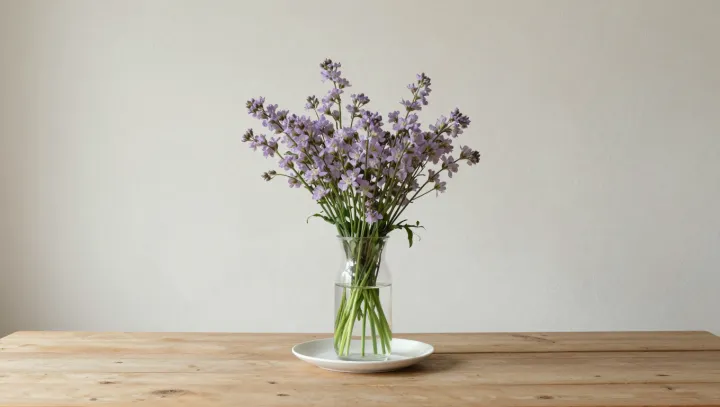
Luxury in a vase rarely comes from abundance; it comes from restraint. High‑end florists treat every empty inch of glass as active negative space, a visual field that frames each stem the way a gallery frame isolates a single print, forcing the eye to slow down and assign value.
Lavender, they insist, is not filler but a directional tool. A single sprig, set off‑axis, creates a visual vector that pulls gaze from rim to water line, much like a leading line in photographic composition, while its low‑intensity volatile oils start shaping mood before the brain has finished naming the flowers. The result is a fast, almost pre‑cognitive read of calm and polish.
Sparse stems do more work because they are given room to articulate. By separating heads and angling them at distinct degrees, designers create parallax and depth, exploiting Gestalt principles so the mind completes an invisible bouquet in the gaps. The lavender then acts as a soft anchor point, a tiny pulse of color and scent that tells the viewer where to land, and just as importantly, where to let the rest stay beautifully empty.