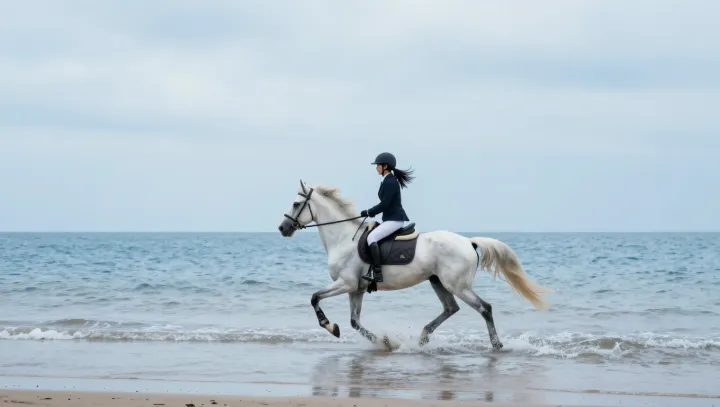
The horse may sprint, yet the rider’s heart quietly joins the race. Sports scientists now argue that elite jumping and dressage demand cardiac conditioning on par with distance running, because the rider’s body never truly rests while the horse moves.
Rider workload is badly underestimated. Force-plate data and motion analysis show that to stay still in the saddle, the athlete performs near-continuous isometric contraction of the core and hip musculature, a pattern that restricts blood flow and drives heart rate upward even at modest speed. Add rapid shifts in center of mass over fences, and oxygen consumption begins to resemble that of steady-state endurance exercise rather than a series of short efforts.
Stress physiology adds another layer. High stakes, split-second decisions and the need for fine motor control under pressure trigger sympathetic nervous system activation, with surges of catecholamines that elevate heart rate and blood pressure independent of mechanical work. Field studies using portable VO2 measurement and heart-rate variability monitoring show riders operating at a high fraction of their maximal aerobic capacity throughout entire rounds, not just in explosive bursts.
So the horse covers the distance, but the rider pays a hidden metabolic bill. Without robust stroke volume, strong ventilatory capacity and well-trained autonomic regulation, technical skill alone cannot be fully applied, and every stride of brilliance on the course starts to exact a cardiovascular price.