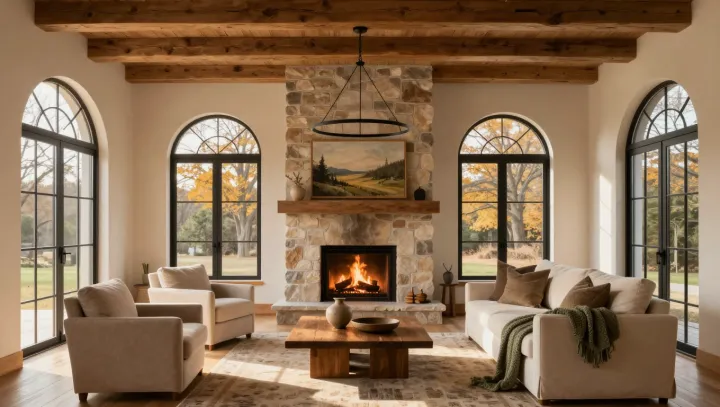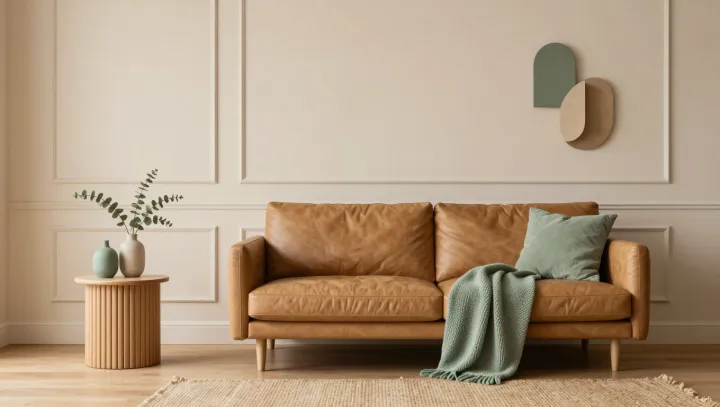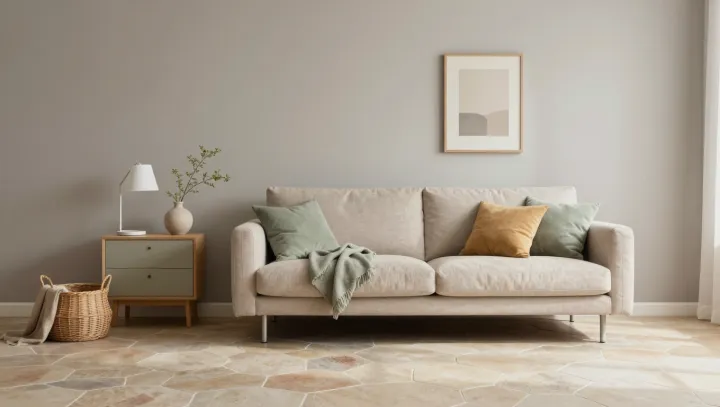
A room drained of color can feel oddly full. Not empty at all. In a pale living room, the real drama is staged by light and texture, then edited by the brain into something far more intense than the raw scene deserves.
Designers who strip a space to whites, grays, and muted woods are not chasing absence; they are outsourcing richness to the visual cortex, which relies on lateral inhibition and contrast enhancement to make sense of edges and surfaces. When hue is almost constant, even a slight shift in luminance or a change in material roughness creates a local spike in neural firing. A linen sofa beside a lacquered table, a matte wall against a satin curtain, becomes a field test of sensory discrimination rather than a calm void.
This is why a beam of light sliding across a plaster wall feels almost cinematic in a neutral room. Remove saturated color and the brain reallocates attention to micro-contrasts in specular reflection, shadow gradient, and fabric weave, processing them through orientation-selective neurons that code edges and patterns. The result is a strange surplus: a space that looks minimal in photographs yet feels, to a moving observer, layered and kinetic.