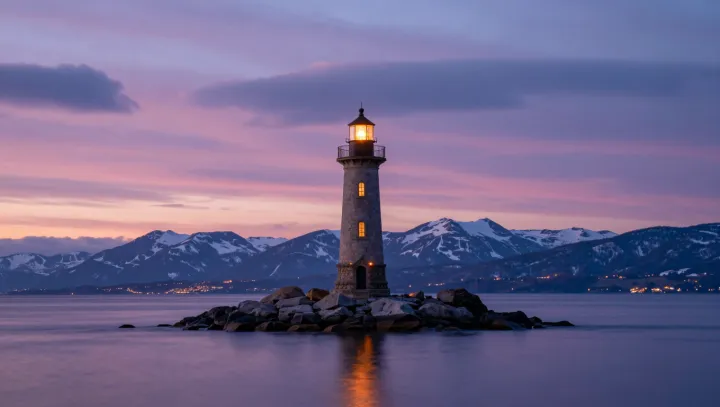
Cold stone started it. A tower on a cliff, a fixed light, a simple rule: keep ships alive. No poetry there. Yet that stripped utility, rising alone above black water and bare rock, created a geometry of isolation that artists and writers could not resist.
The odd truth is that romance grew from distance, not from love. Early mariners spent long stretches offshore, so a shore tower became the last thing seen when leaving and the first thing seen when returning, a visual bookmark for separation and reunion. As printmakers, postcard publishers and travel posters began to standardize coastal scenes, that vertical silhouette against dusk sky turned into a repeatable icon, an easy graphic for printers and, later, for camera sensors and viewfinders.
The stronger claim is that photography finished the transformation. Long exposure shots exaggerated the fixed light into a halo, while wide apertures blurred everything except the tower, suggesting a single, waiting subject. Travel brands learned to leverage that cue: one tower, one horizon, one implied story of the person just out of frame. Social media then closed the loop, rewarding images that compress solitude, hope and risk into one structure. A safety device became emotional shorthand; commerce and nostalgia quietly built the moat around its new meaning.