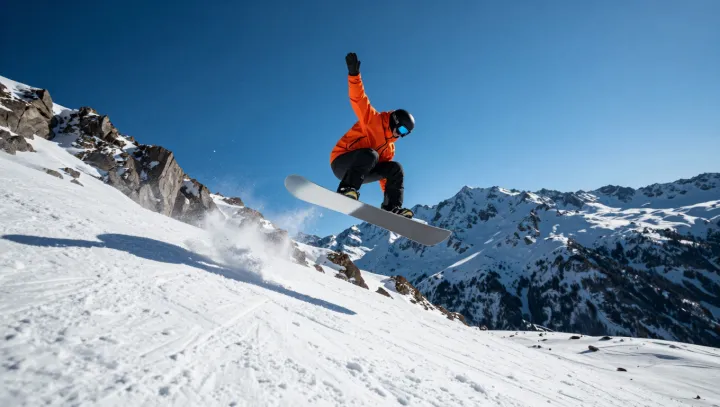
Small air wins. A flat, almost dull patch of snow or concrete does more for park safety than any foam pit, precisely because it strips riding down to balance, edge pressure and repetition, not spectacle.
The real work looks boring. Riders who quietly rehearse centimeter high hops are exploiting basic motor learning and proprioception, training the vestibular system and fine ankle articulation so that takeoff and landing forces stay predictable instead of chaotic when height eventually increases.
The logic runs against park bravado. Instead of chasing a single viral trick, coaches now talk in sets and reps, building closed-loop feedback: identical approach speed, identical pop, identical landing track, each micro jump a data point that tightens body awareness and trims reaction time.
Risk does not disappear; it gets re-priced. By front-loading hundreds of submaximal jumps on flat ground, riders lower cognitive load when they finally leave the lip, because the joint angles and pressure shifts are already encoded as muscle memory, not improvised midair.
Progress, in this view, is not a leap but a calibration. The loud moment in the park begins as a series of almost silent hops that only the rider, and their quietly rewired balance, can really hear.