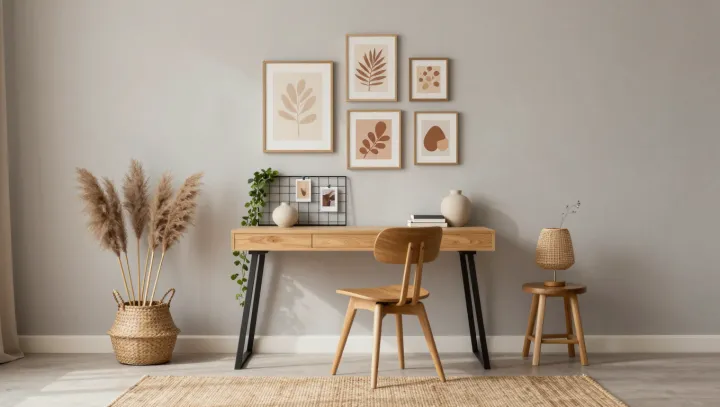
Bare space, not mahogany desks, now signals quiet luxury in the home office. A stripped-back room with soft neutrals and woven textures does more than please the eye; it edits visual noise, which researchers link to higher cognitive load and lower sustained attention. When surfaces stay largely clear and storage is concealed, the brain processes fewer competing cues and focus deepens almost by default.
Surprisingly, warmth comes from restraint, not from piles of decor. Natural materials such as linen, oak, rattan and wool introduce subtle variations in light reflectance and tactile feedback, so the room feels lived-in rather than sterile. Muted wall art, a simple grid photo display and a single stem of dried botanicals act like punctuation marks in the field of view, giving the gaze places to rest without dragging it into distraction-heavy detail.
What reads as high-end is the sense of intention. When every object earns its spot, negative space starts to function almost like a design material in its own right, framing a laptop, a slim task lamp or a textural rug with the kind of clarity more often associated with gallery curation. The result is a workspace that looks edited, feels calm and quietly signals that time and attention are treated as the rarest assets in the room.