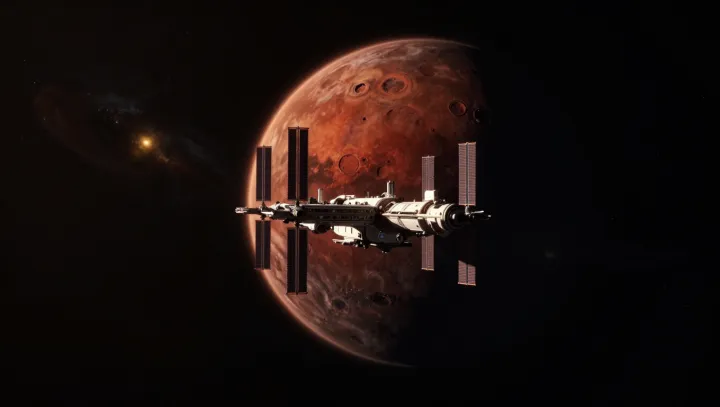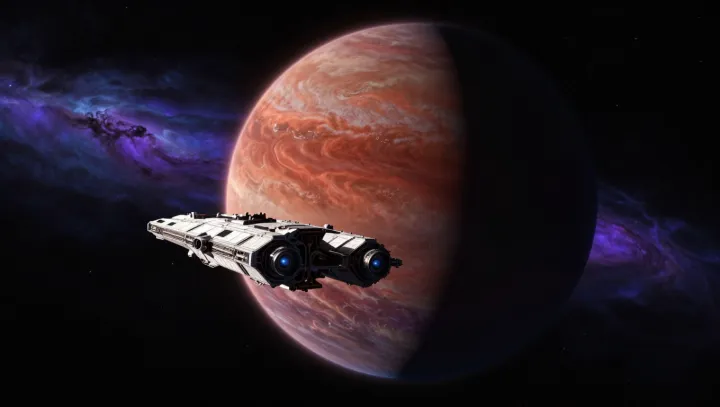
A knife-edge compromise holds a skimming spacecraft in place. Just above an alien horizon, gravity hauls it inward while sheer speed keeps it from surrendering. The vehicle hurtles sideways so fast that as it falls, the ground curves away beneath it, matching the arc described in orbital mechanics textbooks.
The basic claim sounds almost arrogant: orbit is controlled free fall, not weightless escape. Gravity supplies continuous centripetal acceleration, while orbital velocity bends the flight path into a closed curve instead of a plunge. Shift that velocity a little higher and the path stretches toward escape trajectory; trim it and the craft intersects rock or cloud. At such low altitudes, a whisper of gas changes everything. The atmosphere is thin, yet its drag saps kinetic energy, converting orbital velocity into heat that flares along the heat shield during aerobraking.
The surprising part is how engineers exploit this danger. By dipping a spacecraft into that rarefied air, they trade propellant for physics, letting drag slowly lower apoapsis while guidance systems watch density fluctuations in the exosphere. Too deep, and dynamic pressure tears hardware or forces a fiery reentry; too shallow, and the pass barely nudges the trajectory. Between those outcomes lies a narrow corridor, carved by gravity, speed and molecules that are almost not there at all.