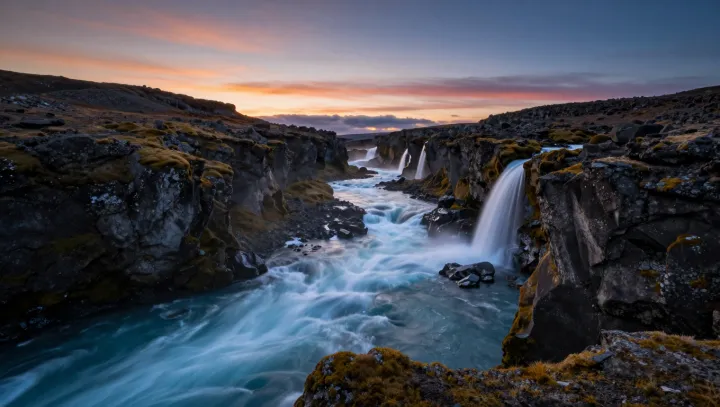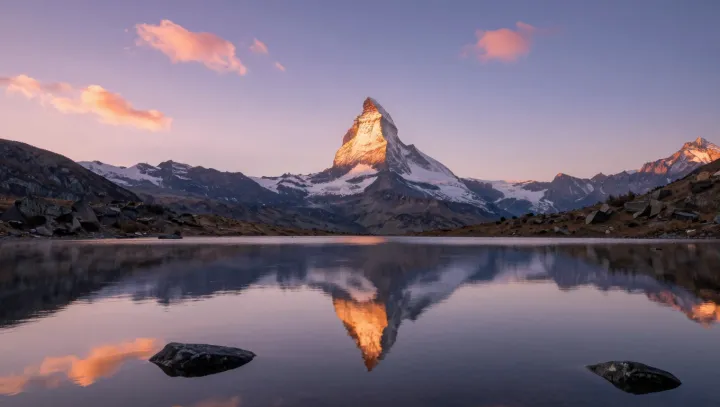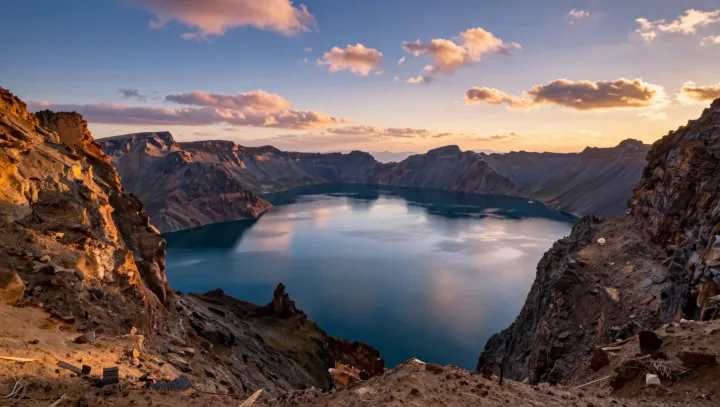
Red sky can make blue water stronger, not weaker. That counterintuitive twist comes from how the air, the crater walls and the lake jointly filter and redirect light, so that the water ends up sampling a very different slice of the spectrum than the sky that glows above it.
Sunset strips the sunlight first. Short wavelengths are scattered out by Rayleigh scattering in the upper atmosphere, leaving a beam enriched in reds and oranges on its direct path to the horizon, which is why the sky near the Sun looks flushed. Off to the side, though, scattered blue and green still rain down from other directions, arriving at the crater from higher angles and feeding the lake with a cooler spectral mix than the blood‑tinted glow you see straight ahead.
Rock walls then act like a spectral gate. Their mineral surfaces absorb more red than blue, so grazing rays that smack into the crater rim lose much of their longer‑wavelength energy before bouncing toward the water. What reaches the lake surface is already skewed toward shorter wavelengths, which water itself transmits and then preferentially scatters back to your eyes through volumetric scattering inside the basin.
Angle finishes the trick. At low solar elevation, reflection at the air‑water interface grows more selective, sending much of the remaining warm light away as glare while letting cooler wavelengths penetrate, interact with suspended particles and then leak back out. So the same solar disk that paints the sky in red can, by geometry and wavelength sorting, leave the crater lake below looking almost electric in blue.