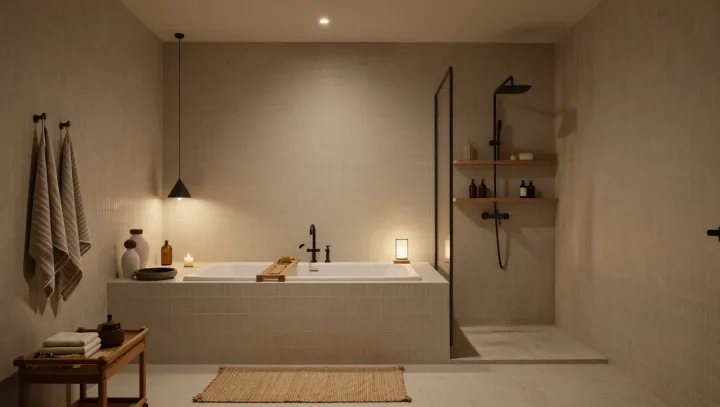
One slim vertical shelf can make a cramped bathroom feel like it just exhaled. Mounted above the tub, the unit pulls the eye up, extending the perceived ceiling line and breaking the usual low horizontal band of fixtures that visually compress the room.
The design trick is brutal in its simplicity. By stacking bottles, soap, and razors in a single column, the shelf collapses clutter entropy into one organized spine, freeing the rest of the surround and reducing what psychologists call visual noise. With fewer scattered objects hitting the retina, the brain recalculates the envelope of the space as calmer and therefore larger.
A tall shelf also rewrites sightlines. Instead of the gaze stopping at the tub rim, it now runs from floor to top tray, creating a continuous vertical axis that mimics the effect of floor‑to‑ceiling drapery. That axis works like a built‑in vanishing point, exploiting principles of depth perception and figure–ground separation to stretch the walls without touching the floor plan.
Light does the rest. A narrow, open shelf casts minimal shadow and keeps reflective tile and glass exposed, so luminance spreads more evenly. More uninterrupted surface area, more bounce light, and a single disciplined storage column: the math of spaciousness, solved with one bolt and a board.